The India vs Pakistan rivalry is the biggest rivalry in any form of
cricket. It is due to the history between the two countries and the
relationship of love and hate between the fans of the two countries.
The
matches are nothing short of battles with players at each other’s
throats and the fans supporting their nation to the full. This is
visible from the fact that the tickets for the 2015 World Cup encounter
was sold in less than 12 minutes and more than 20,000 Indian fans would
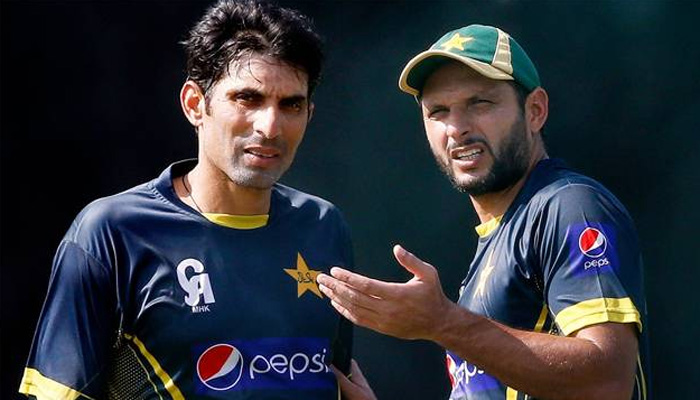
be there at the Adelaide Oval to support the tricolour. ICC World Cup 2015: INDIA VS PAKISTAN – Review and Preview of the clash of Titans. (Photo Source: AFP)
The rivalry has even surpassed the Ashes and now has become the big
ticket event at the biggest stage of them all, the World Cup.
Interestingly, India and Pakistan never met in the World cup until 1992
edition. There could have been a mega final in 1987, but both India and
Pakistan lost to England and Australia respectively in the semis.
Many players get to make a name for themselves in these clashes.
Moments are created that live until eternity. People remember you for
that one thing you did during the India-Pakistan clash. And if the stage
is the cricket World cup, the intensity multiplies ten folds.
Players are extra motivated in these clashes. And that has led to
some brilliant innings, breath taking shots, great displays of bowling
and overall, pure high voltage entertainment for the viewers. Since
meeting for the first time in 1992 World cup held in Australia and New
Zealand, India has never been defeated by Pakistan in World cup
encounter and currently India is 5-0 up.
Let’s have a view at those encounters in the World cup. 1992 World cup : Sydney Cricket Ground.
The very first meeting between the Asian giants and rivals in the
World cup was not short of any drama. India won the toss and batted
first. India went on to score 216 runs in 49 overs permitted in the
allotted time. The highest scorer for India was the little master Sachin
Tendulkar with 54 runs and Ajay Jadeja with 45 runs to their names.
Mushtaq Ahmed took 3 for 59 in his 10 overs.
The Pakistani innings was not off to a great start, but opener Aamir
Sohail made a brilliant 62 runs and along with veteran Javed Miandad who
scored 40, was taking Pakistan closer to victory. But Tendulkar removed
Sohail and Javagal Srinath’s yorker shattered the stumps of Javed
Miandad and Pakistan meekly folded up for 173 runs to lose the match by
43 runs.
Sachin Tendulkar was named the man of the match for his 54 runs and 1 wicket.
Fact: During the match, incensed with Indian stumper Kiran More’s
appealing, Javed Miandad out of nowhere started mocking More by jumping
up and down in the air. This made the highlight of every news channel in
those days and the image is one the most iconic images from the 1992
World cup. Here is the Video:
1996 World Cup: Bangalore (Quarter-final)
India and Pakistan met in the 1996 World cup in the knockout stage of
the tournament. The quarterfinal was held in the M.Chinnaswamy Stadium
in Banglalore. The stadium was packed to its capacity and it erupted as
Indian captain Mohd. Azharuddin won the toss and elected to bat first.
India got off to a brisk start with Navjot Sidhu and Sachin Tendulkar
scoring freely against a capable Pakistani attack.
Sidhu made a brilliant 93 off 115 balls before being dismissed by
Mushtaq Ahmed. But the encore came in the Waqar Younis over in the
death, where Ajay Jadeja hit 2 sixes and 2 fours to take 22 runs off the
fast bowler. India made 57 runs in their last 4 overs thanks to Jadeja
(45 off 25 balls) and made 287 runs after 50 overs.
Pakistan started off brilliantly with Aamir Sohail and Saeed Anwar
scoring 84 runs in the first 10 overs. But a momentary loss of
concentration cost Sohail his wicket and from then on, India kept
chipping at the Pakistani team with regular wickets. The last effort
came from veteran Javed Miandad who was playing his 6th World Cup and he scored 38 runs before being run out by Ajay Jadeja. This was his last international match.
India won the match by 39 runs and advanced to the Semi-finals.
Navjot Singh Sidhu was named the man of the match for his 93 runs.
Fact: Aamir Sohail hit a boundary to point and then poked Venkatesh
Prasad saying that he will hit the next ball towards the same area.
Prasad uprooted his off stump the very next ball and gave him a rather
colourful send off. A memorable 1996 World cup moment of all time. Here is the Video:
1999 World Cup: Manchester
India and Pakistan had ceased any cricket ties due to the Kargil war
in 1999. This meant that this encounter was truly an emotional one for
both sides.
India batted first after winning the toss and limped their way to 227
runs in their 50 overs. Pakistan never let any batsman settle down apart
from Rahul Dravid who scored 60 and Captain Mohammad Azharuddin who
scored 59 runs.
Pakistan’s chase was started with Saeed Anwar attacking the Indian
bowlers. But Indians dismissed Shahid Afridi, Ijaz Ahmed, Saleem Malik
cheaply before some resistance from Inzaman-ul-haq (41) and Moin Khan
(34). Venkatesh Prasad took a World Cup best 5 for 27 to dismiss
Pakistan for a meagre 182 runs and India won the match by 47 runs.
Venkatesh Prasad was chosen Man of the match for his 5 wicket haul. 2003 World Cup: Centurion
Tempers were high because of some statements given by the Pakistani
team members before the match started. Pakistan batted first and scored a
good 273 runs for loss of 7 wickets thanks to a brilliant 101 by Saeed
Anwar and able support from Younis Khan (32) and Rashid Latif (31).
Ashish Nehra and Zaheer Khan took 2 wickets each.
Indian reply began with a bang with Virender Sehwag cutting Waqar
Younis for a six and then Sachin Tendulkar hit what is perhaps the most
famous shot of all World cups. He hit a 96mph ball from Shoaib Akhtar
straight into the crowds over the point region. Sehwag and Tendulkar
attacked Akhtar and he was taken off the attack after just one over
conceding 22 runs.
Though Sehwag, Ganguly fell early, Sachin and Kaif kept the runs
going until Kaif was dismissed for 35 and Shoaib returned to dismiss an
injured Sahin Tendulkar 2 short of his hundred. Now India needed around
120 runs and Dravid and Yuvraj were at the crease. Pakistan built up the
pressure, but both the batsmen kept scoring runs and eventually India
registered their 4rd straight win over Pakistan in World cups by 6 wickets.
Sachin Tendulkar was named the Man of the match for his brilliant 98 runs. 2011 World Cup: Mohali (Semi-final)
This clash between India and Pakistan was not only high voltage, but
also high pressure as it was the second semi-final of the 2011 World
Cup. The winner would go on to meet Sri Lanka in the final at Mumbai.
MS Dhoni won the toss and chose to bat first on the fast Mohali
pitch. India got off to a quick start thanks to Sehwag who scored 38
runs out of 48 scored in first 5 overs. After that Sachin Tendulkar
tried to stitch partnerships with Gautam Gambhir and MS Dhoni, before
getting out to Saeed Ajmal for 85 runs. Indian innings folded for 260
runs. Wahab Riaz took 5 wickets for 46 runs in a brilliant piece of
swing bowling. He also dismissed the 2011 World Cup man of the
tournament Yuvraj Singh for a first ball duck.
Pakistan’s chase never got any momentum despite Mohammad Hafeez’s 43
runs at the top as the Indian bowlers continued to chip away at the
wickets. Dhoni’s tight field settings didn’t allow easy singles and the
Pakistani batsmen got out trying to hit the big shots. Even a late surge
from Misbha-ul-Haq (56) could not help Pakistan and he was the last
wicket to fall. Pakistan fell short by 29 runs and India advanced to the
finals of 2011 World cup and the rest as you know is history.
Sachin Tendulkar got the Man of the match for his 85 runs. 2015 World Cup: Adelaide
This match is supposed to be the most watched match in the World Cup
history. The tickets for this match sold out in under 12 minutes and
more than 20,000 Indian fans will be present in the ground to support
their team.
The match is a huge one not only because it is an India Pakistan
encounter, but it will also set the momentum for the rest of the World
cup for both the teams. Captain MS Dhoni and Misbah-ul-Haq have enough
on their plate already with India’s poor performance in the on-going
triseries and Saeed Ajmal’s suspension due to a suspect action have
dented their plans for the World cup.
Both teams went in for some surprises in Stuart Binny for India and
Sohail Khan for Pakistan. Both teams have their shares of in-form
players. Rohit Sharma, Suresh Raina for India and Misbah, Shezad and
Younis for Pakistan.
Here are the World Cup squads of both the teams: INDIA: Ravichandran Ashwin, Stuart Binny, Shikhar Dhawan, MS Dhoni
(capt & wk), Ravindra Jadeja, Virat Kohli, Bhuvneshwar Kumar,
Akshar Patel, Ajinkya Rahane, Suresh Raina, Ambati Rayudu, Mohammed
Shami, Ishant Sharma, Rohit Sharma, Umesh Yadav. PAKISTAN: Ahmed Shehzad, Ehsan Adil, Haris Sohail, Junaid Khan,
Misbah-ul-Haq (capt), Mohammad Hafeez, Mohammad Irfan, Sarfraz Ahmed
(wk), Shahid Afridi, Sohaib Maqsood, Sohail Khan, Umar Akmal, Wahab
Riaz, Yasir Shah, Younus Khan.
So, we saw a recap of the 5 matches that India and Pakistan have
played in the World cup against each other. Each and every encounter has
been nothing less than a battle for not only the fans but the players
as well.
If you do well in a India-Pakistan encounter, you become a hero for
life. No one has forgotten the Javagal Srinath Yorker to Miandad in
1992, Jadeja’s assault on Waqar and Aamir Sohail- Venkatesh Prasad dual
in 1996 match. Anwar and Tendulkar’s innings and Sachin-Sehwag’s 2 sixes
towards point region in 2003 World cup. All these are moments etched in
every fan’s memory and will be a part of World Cup history. Now is the time for some stats: Highest Total:
India : 276/4 World cup 2003
Pakistan: 273/7 World cup 2003 Highest score:
98 – Sachin Tendulkar 2003
101- Saeed Anwar 2003 Best Bowling:
5-27 Venkatesh Prasad 1999
5-46 Wahab Riaz 2011
Interestingly no Indian batsman has scored a 100 against Pakistan in
any World cup matches, with Sachin Tendulkar’s 98 being the highest.
Pakistan’s Saeed Anwar scored a beautiful 101 in the 2003 encounter.
Whereas, Venkatesh Prasad and Wahab Riaz took a 5 wicket haul each in 1999 and 2011 respectively.
A record-shattering sixth-wicket stand
between Luke Ronchi and Grant Elliott yanked New Zealand out of the
mire at 93 for 5, and sent them hurtling to 360 for 5, in what began as a
counterattack, then grew into a sustained assault, then a gargantuan,
unstoppable thing of terror. Their unbeaten stand of 267 off 180 balls
was by a distance the highest ever for the sixth wicket, and is the second for any wicket for New Zealand.
Ronchi was chief architect, clobbering 170 from 99 balls, murdering
anything pitched up, and never failing to slam the short balls over the
leg-side fence. Rarely did he fail to execute the strokes he attempted,
no matter how audacious. He was already bloody-minded when he came to
the crease, but his appetite for boundaries only grew more voracious as
the total became gargantuan. His maiden ton was scored from 74 balls.
The next 70 runs were slammed off 25. He hit nine sixes and 14 fours in
all.
Elliott was slightly more reserved in the early phase of their
partnership, but once he had set himself a foundation with 25 runs off
35 balls, his strike rate moved smoothly upwards, even if he sought to
give Ronchi more of the bowling. By the end of the innings, Elliott was
creaming the dross Sri Lanka served up at the death almost as cleanly as
his partner was was. His 104 not out came from 96 deliveries.
Sri Lanka were indisciplined with the ball to begin with, despite the
seam movement on offer, but had become truly pathetic by the end of the
innings. Suranga Lakmal missed his lengths more often than he hit them
towards the death, traveling for 93 in his 10 overs. Nuwan Kulasekara
nabbed two wickets with the new ball, but was almost as bad with the
older one. He disappeared for 73 from his full quota.
Lasith Malinga's absence was keenly felt at the death, but Angelo
Mathews was also missing, thanks to a calf niggle. Acting captain Lahiru
Thirimanne took two wickets with his seam-up deliveries, but was
otherwise disappointing in the field, shelling difficult chances off
Ronchi and Elliott once each. Elliott was 47 when the diving chance at
short cover went down. Ronchi was already at 167 when the overhead
chance, running back from point, was spilled in the last over.
Ronchi began his charge with two of the simplest sixes he will ever hit.
Jeevan Mendis dropped the ball halfway down the pitch on successive
deliveries, and was walloped over cow corner in the 25th over. The
boundaries were scored almost at will from then on.
Sachithra Senanayake's introduction to the attack had been delayed
slightly, thanks to the earlier success of the seamers, but he was
picked off effortlessly by Ronchi and Elliott, who used the sweep to
excellent effect against his leg-stump line. They occasionally came down
the pitch to the spinners, but were largely content to punish the bad
balls - of which there were many - from the crease. Sri Lanka's bowlers
had by the 30th over failed to get anything out of the surface, and
failed to string any sort of strategy together against the onslaught.
The visitors would have had hopes of dismissing New Zealand for 175
after 20 overs, but by the 37th were trying to prevent 300.
Ronchi and Elliott strolled past their individual half-centuries, and by
the 40th over, had catapulted New Zealand to 238 for 5. The last seven
overs were a blur of boundaries, as Sri Lanka failed emphatically to
execute a wide yorker plan with their quicks, instead routinely
delivering knee-high full tosses, which the batsmen sometimes hammered
down the ground, and at others, slapped to the offside fence. Towards
the close, Thirimanne was relying on the offspin of Tillakaratne
Dilshan, who fared no better than any of the others. The pair struck 122
runs from the last 10 overs, to complete one of the most emphatic
lower-order comebacks in a tour brimming with them.
Earlier, Thirimanne spied a green-tinged surface and bowled first,
having won Sri Lanka's sixth toss in seven matches this tour. A
breakthrough came at the earliest opportunity. Martin Guptill's
frustrating tour continued when he nicked behind first ball, chasing a
full, wide one from Nuwan Kulasekara.
There was enough movement in the air and off the seam to prompt brief
reticence even from Brendon McCullum in the early overs, but Sri Lanka
did not bowl tightly enough to make optimum use of the conditions. Their
main mistake early on was dropping him at point, on one, after which
the boundaries quickly began to flow from his blade. Kane Williamson
efficiently put away the poor balls, despite having been beaten by a few
good ones, and quickly the New Zealand run rate was nearing six.
They hit 51 runs together, and it took two fine deliveries to dismiss
each batsman. McCullum was caught in front by a Kulasekara indipper,
before Williamson nicked a straightening Thisara Perera ball behind.
There was to be unexpected joy for Sri Lanka, when Thirimanne's sought
to deliver the overs Mathews customarily contributes. He removed the
out-of-sorts Ross Taylor in the 18th over, before winning an lbw
decision against Corey Anderson in the 20th - though replays suggest the
ball pitched marginally outside leg stump.
With New Zealand 93 for 5, Sri Lanka had an opportunity to dismiss them
for a meagre score. As has been the theme throughout the series, they
failed to shut down the lower middle order, and were punished in the
most severe fashion imaginable.
As the ICC World Cup cricket 2015 is about to tee off, several sons of former World Cup stars — Stuart Broad, Tom Latham, and Mitchell Marsh — have been included in various squads.Abhishek Mukherjeelooks back at father-son pairs to have played World Cup cricket.
Family affairs are a common matter in cricket, even at the highest level. There have been many instances of father and son both playing Tests as well as two examples of three generations (the Khans and the Headleys) playing Test cricket. Despite its late inception, One-Day Internationals (ODIs) have had their fair share of fathers and sons as well. Surprisingly, not a lot of these pairs have played in the World Cup.
WhenDerek Pringletook field againstWest Indiesat Gujranwala in World Cup 1987, he created a record by being the first World Cupper’s son to play the tournament. His father Don had played two matches in World Cup 1975 for East Africa (and passed away less than four months after his last outing). Derek was born in Kenya.
The next edition of the World Cup saw Chris, son ofLance Cairns, take field. Lance Cairns had played international cricket till December 1985, while Chris made his international debut in November 1989; the gap of less than four years is the least for any father-son combination.
Chris Broadhad made his World Cup debut alongside Chris Broad. Chris’ son Stuart followed his father’s footsteps in 2007 when he played his first World Cup match against West Indies at Kensington Oval (it was also Brian Lara’s last international match). Stuart was a regular in 2011 and has been included in the 2015 squad.
Geoff Marshwas the first cricketer to win the World Cup as both player (in 1987) and coach (in 1999).Rod Lathamhad been a crucial cog inMartin Crowe’s famous dibbly-dobbly-wibbly-wobbly scheme in World Cup 1992. Their sons,Mitchell MarshandTom Latham, are all set to make their World Cup debuts in 2015.
Pakistan at Cricket World Cup Player by Player Analysis: Pakistan has announced its 15-man World Cup squad.
Misbah-ul-Haq will be serving as the leader of the team while legendary
Shahid Afridi will be his vice-captain. There were numerous
speculations on who should be in and who should be out? The biggest
problem was the position of no. 6 and the inclusion of an all-rounder
who could fight alongside Shahid Afridi. Misbah-ul-Haq
will be serving as the leader of the team while legendary Shahid Afridi
will be his vice-captain. (Photo Source : ZeeNews.India).
Many names were in circulation which included former Pakistan Captain
Shoaib Malik and the newbie Anwar Ali and Bilawal Bhatti. Asad Shafiq
was also in contention after performing so well in the on-going
Pentangular Cup. Veteran Kamran Akmal was thought to make a comeback but
none of the mentioned made it to the final 15.
Fans of a specific country are very vigorous about their team’s
chances in mega-events. A team’s prospect to win rests in its player’s
individual performances. Like drop by drop makes a pool, player by
player makes a collective team effort. We have combined the meticulous
data of Pakistan’s representation at the World Cup. The stats include
each player’s contribution in Australia and New Zealand as well as in
previous world cups. Most experienced in Australia/New Zealand: Shahid Afridi – 41 matches Most experienced in World Cups: Shahid Afridi – 20 matches
Players
Performance in AUS/NZ
Performance in WCs
Matches
Runs
Wickets
Matches
Runs
Wickets
Misbah-ul-Haq
5
203
-
8
248
-
Ahmed Shehzad
5
188
-
5
44
-
Mohammad Hafeez
12
241
8
10
230
11
Younis Khan
15
262
-
16
306
0
Haris Sohail
First Experience
First Experience
Sohaib Maqsood
First Experience
First Experience
Shahid Afridi
41
891
45
20
209
28
Umar Akmal
11
281
-
7
240
-
Sarfraz Ahmed
1
6
-
First Experience
Ehsan Adil
First Experience
First Experience
Yasir Shah
First Experience
First Experience
Wahab Riaz
4
3
8
5
8
8
Mohammad Irfan
First Experience
First Experience
Junaid Khan
First Experience
First Experience
Sohail Khan
First Experience
First Experience
As many as 8 players will be making their World Cup Debut this year while Shahid Afridi will be playing his 5th World Cup. Younis Khan will be playing his forth World Cup and Mohammad Hafeez will be playing his 3rd WC. Captain Misbah-ul-Haq and Umar Akmal will be playing their 2nd World Cup.
Dubai: The International Cricket Council (ICC) today released the
provisional squads of 12 teams for the next year‘s World Cup
in Australia and New Zealand.
However co-hosts Australia and minnows Ireland have decided
against releasing the names of the players in the provisional list
although they have submitted the list of 30-members to the
parent body within the stipulated deadline. Since its inception in 1975
with the Prudential Cup, it will be the first edition which
won‘t feature either among Javed Miandad (‘75,
‘79, ‘83, ‘87, ‘92,
‘96) or Sachin Tendulkar (‘92, ‘96,
‘99, ‘03, ‘07, ‘11), who have
played six editions each.
Sri Lankan legend Mahela Jayawardene and Pakistan‘s flamboyant
all-rounder Shahid Afridi are the two most experienced players
going into the 2015 World Cup, which will be their fifth appearance in
the global edition. Both Jayawardene and Afridi, first played in World
Cup during the 1999 edition in England and since then have appeared in
all editions. While Jayawardene featured in the final of the ICC Cricket
World Cup 2007 and 2011, as well as the semi-final of the ICC
Cricket World Cup 2003, Shahid Afridi was a member of the Pakistan side
that played the final at Lord‘s in 1999.
He captained Pakistan at the ICC Cricket World Cup 2011 where Pakistan
reached the semi-final. If the two players are named in the
final line-ups, likely to be announced around 8 January 2015,
then they will join the exclusive company of Wasim Akram, Shivnarine
Chanderpaul, Aravinda de Silva, Inzamam-ul-Haq, Sanath
Jayasuriya, Jacques Kallis, Imran Khan, Brian Lara, Muttiah Muralidaran,
Thomas Odoyo, Ricky Ponting, Arjuna Ranatunga and Steve Tikolo, who
have each played in five ICC Cricket World Cups to date.
Pakistan‘s Javed Miandad and India‘s Sachin
Tendulkar, with six ICC Cricket World Cups each, share the record for
the most appearances at ICC‘s pinnacle event. Besides
Jayawardene and Shahid Afridi, seven other players are in line to appear
in their fourth World Cup: James Anderson, Chris Gayle, Brendon
McCullum, Younis Khan, Robin Peterson, Kumar Sangakkara and Daniel
Vettori.
The United Arab Emirates (UAE), which is returning the ICC Cricket World
Cup for the first time since 1996, has named the oldest and youngest
players of the tournament in its 30-player provisional squad.
Khurram Khan at 43 is the oldest players (born 21 June 1971) while
Yodhin Punja, who turned 15 on 24 April 2014, is the youngest player.
Cricket’s world cup
tournament is all set to begin within next 65 days in Australia and New
Zealand. This World Cup is said to be of great significance for the
Pakistani cricket team as it will be played on the same ground where
under the captaincy of Imran Khan, Pakistan lifted its first and only
World Cup trophy.
In
honor of this occasion, the Pakistan Cricket Board (PCB) is planning to
bring back the same jersey used in the 1992 World Cup worn by the
Green-Shirts 22 years ago.
According
to media reports, The ICC has announced that the Replica Playing Shirt
has been designed to commemorate the 1992 ICC Cricket World Cup which
was hosted by Australia and New Zealand. The shirt replicates the jersey
worn by the Pakistan players during the 1992 World Cup.
Pakistan
team coach Waqar Younis has high hopes for the 2015 World Cup, saying
the green-shirts have all it needs to win the World Cup 2015.
Pakistan broke their five-match losing streak with a thrilling win over
New Zealand in Dubai. The bigger gain though, according to captain
Misbah-ul-Haq, was the success of Haris Sohail's part-time left-arm spin as Pakistan look for options for the sixth bowler's slot, following Mohammad Hafeez's ban.
Hafeez's suspension, coming soon after Saeed Ajmal's suspension, has
left Pakistan's combination for the series and the World Cup a little
uncertain, and the side is actively exploring its options with batsmen
who can bowl. With Hafeez likely to leave after the second ODI, to work
on remodeling his action, Pakistan will have another vacant slot in
their XI open for experimentation. The challenge for Pakistan - who have
had an erratic year in terms of ODI results - will be to ensure that
they keep winning and gain some momentum before the World Cup despite
the experiments.
The batting innings of both teams followed similar trajectories in the
last game. While Misbah brushed off Pakistan's top-order stutter as "an
off day", New Zealand's top order was missing Martin Guptill. In the
field, New Zealand were done in by the level-headed stand between Shahid
Afridi and Haris Sohail, and Nathan McCullum later said the side had
missed "a key moment" when they failed to keep Pakistan's chase in
check.
Ahead of the second ODI, however, the side received a boost when Kane
Williamson was cleared to resume bowling in international cricket,
enhancing the side's spin options in conducive conditions. A 0-1
scoreline has become a familiar sight for New Zealand on this tour but
they have shown the tenacity to fight back. They levelled the Test
series with an innings victory a few weeks ago and Kane Williamson was
hopeful some of that confidence would rub off on the vastly different
ODI side.
Jimmy Neesham has faced a dip in batting form since New Zealand's
tour to the West Indies earlier this year. He made 16 and 10 in the
ODIs against South Africa in October and his highest score on this tour
has been 17. Ross Taylor's century carried New Zealand in the last game
but if the top order fails, runs from Neesham will be crucial.
Pakistan experimented with Sarfraz Ahmed's batting order in the
first ODI, pushing him down to No. 7. He scored only 26 but his
resourceful innings revived a flagging chase, and provided Haris Sohail
and Shahid Afridi the launching pad for their match-winning stand. He
could return to the top order after Hafeez leaves the squad but for this
game, Pakistan could look at keeping his batting position flexible.
Team news
Martin Guptill missed the first game due to a hamstring niggle while
Corey Anderson was rested as a precautionary measure after being hit on
the helmet during the first T20. Their fitness will be assessed on the
morning of the game.
New Zealand (probable) 1 Anton Devcich, 2 Dean Brownlie, 3 Kane
Williamson (capt), 4 Ross Taylor, 5 Tom Latham, 6 Jimmy Neesham, 7 Luke
Ronchi (wk), 8 Daniel Vettori, 9 Nathan McCullum, 10 Kyle Mills, 11 Adam
Milne/Matt Henry
Pakistan are likely to opt for an unchanged XI but if they do change
their XI, it could be in the bowling line-up with Sohail Tanvir possibly
coming in in place of Umar Gul.
Pakistan 1 Mohammad Hafeez, 2 Ahmed Shehzad, 3 Younis Khan, 4
Asad Shafiq, 5 Misbah-ul-Haq (capt), 6 Haris Sohail, 7 Sarfraz Ahmed
(wk), 8 Shahid Afridi, 9 Umar Gul, 10 Wahab Riaz, 11 Mohammad Irfan
Pitch and conditions
The Sharjah pitch is known for high scores but during the last game that
Pakistan played there - against Australia in October - it also offered
help for the spinners. Williamson said that the track during the Test
series was devoid of grass but had more pace and bounce than the other
venues. Teams winning the toss and batting have won 66 of the 125
matches played at the venue.
Stats & trivia
New Zealand's highest opening stand in 11 ODIs in 2014 is 56 -
between Martin Guptill and Jesse Ryder against West Indies in January
2014. New Zealand's opening batsmen have had only two half-century
stands in 2014 compared to Pakistan, who have had five, including a
century partnership
The most successful chase at the Sharjah Cricket Stadium was
the 285 for 4 by West Indies against Pakistan, way back in November 1993
Pakistan and New Zealand have played ten ODIs in Sharjah, with
Pakistan winning all ten. Pakistan have not won more than five ODIs
against New Zealand at any other venue.
Quotes
"Given the conditions our fast bowlers did well in the first game
despite little support from the pitch, and I hope they continue to bowl
like that." Pakistan captain Misbah-ul-Haq
"There will be some good memories for some of the lads, but it is
important we focus on what lies in front of us and the Pakistan side is
quite different as well, so all those challenges need to be considered." New Zealand captain Kane Williamson on the influence of the Sharjah Test on the current side
SHARJAH: Pakistan team head coach Waqar Younis has high hopes for the
2015 World Cup, saying the green-shirts have all it needs to win the
extravaganza.
“We are all excited about the mega event as it is
the game’s top event and everyone has their eyes on the trophy so why
not us? We are trying to take this belief in the dressing room. We have
the potential, we have the talent and the skills; it’s just about
putting it all together and coping with the pressure,” Waqar said in an
interview.
Pakistan beat New Zealand by three wickets in the opener of the five-match ODI series in Dubai last Monday.
The second ODI will be played in Sharjah on Friday.
“We
were very lucky in the 1990s when we had Shoaib Akhtar bowling and
later on, also to some extent Umar Gul who was also bowling fast,” Waqar
added.
“In recent times, we have Wahab Riaz who bowls briskly but
as I said, you have to be disciplined. You cannot go out there and try
and bowl 150kph and go all over the place as control is crucial,” Waqar,
a veteran of 87 Tests and 262 ODIs, underlined.
Speaking about
tall pacer Mohammad Irfan, Waqar said with a 7’1” height, the bowler has
the ability to deliver some unplayable deliveries and the prospect of
this bowler helping Pakistan to glory in the upcoming 2015 World Cup has
not escaped the attention of the Pakistan team management.
“Irfan
is 7’ 1” and it is very easy to break down when you are that tall and
with his structure,” Waqar said adding the World Cup is around the
corner and Irfan has the X-factor that Pakistan need in him.
“The
cricketers who played cricket during the 1990s should come forward and
help Pakistan cricket come up and improve its standing,” urged Waqar.
“It
is great that Moin Khan is around with Mushtaq Ahmed, Ijaz Ahmed and
Mohammad Akram. They understand the demands of modern game and can help
the Pakistan team reach its full potential,” Waqar stated.
With the focus firmly on how the Australians would front up to Test
cricket following Phillip Hughes' death, David Warner scattered whatever
nerves or doubts there may have been with a blazing start to the first
Test. Warner hit seven of his first 15 deliveries for fours on the way
to a 45-ball fifty after Michael Clarke chose to bat on an easy-paced
Adelaide Oval pitch.
India's new-ball pair of Mohammed Shami and Varun Aaron were taken for
81 in 13 overs, and had it not been for Ishant Sharma's control, the
visitors would have suffered more. Warner was on 37 off 20 when Ishant
came on and bowled a maiden to the opener. In his next over, he slanted
one across to have Chris Rogers edging a drive to second slip for 9.
India stuck to their strategy of bowling round the wicket to the
left-handed Warner, probably in an attempt to deny him width. They
still ended up providing plenty of room, particularly at the start, and
Warner punished them. He was especially severe on Aaron who went for
three fours in his opening over, driven first ball through extra cover
and flayed backward of point twice. Shami got the same treatment in his
next over.
Barring a probing first over from Shami to Rogers, the India fast
bowlers could not find much swing or seam and the new ball came on
nicely for Warner to hit on the up freely. The first bouncer the Indians
tried was in the fourth over when Aaron made Warner crouch. The
batsman's response was to upper cut the next ball, another bouncer, for
four. Warner pulled Aaron for successive fours to reach his fifty,
closed his eyes and looked up to the skies, something he also did on
reaching 63, the score Hughes was batting on when he was felled by a
bouncer.
Shane Watson eased himself to a start in his first Test since March,
before chasing a wide one from Aaron on 14 and edging to second slip,
where Shikhar Dhawan made no mistake again.
Clarke was welcomed by a sharp bouncer from Aaron, as Watson had been by
Ishant. Even as Clarke gradually settled down, Warner hit the debutant
legspinner Karn Sharma for a couple of boundaries to go to lunch on 77
off 73, leaving Virat Kohli with lots to think about in his first Test
as captain.
Pakistan 250 for 7 (Haris 85*, Afridi 61) beat New Zealand 246 for 7 (Taylor 105*, Irfan 3-57) by three wickets
Scorecard and ball-by-ball details
Video report - Pakistan clinch three-wicket win
Half-centuries from Haris Sohail and an unexpectedly restrained Shahid Afridi revived
a floundering chase as Pakistan won a thrilling first ODI by three
wickets. New Zealand, having hauled themselves out of a mire of their
own thanks to a century from Ross Taylor,
were running away with the game at the three-quarter mark, but Haris
and Afridi snatched it away with breathtaking coolness. Haris finished
on an unbeaten 85, to go with 10 tight overs of left-arm spin earlier in
the day.
When Afridi walked in to bat, Pakistan were six down, and needed 123 off
122 balls. The left-handed Haris was batting on 34, and had played a
couple of lovely lofted drives against the spinners in a fighting
innings that seemed destined to go down as a small positive in a big
defeat. That's all it would have been if Afridi had made a typically
harebrained 15 or 20 at the other end.
But Afridi knuckled down, and brought out his first slog only 21 balls
into his innings. By then, he had picked up boundaries with a screaming
drive over extra cover and a crafty dab behind the wicket, but had
otherwise simply knocked the ball around for ones and twos. That first
slog produced a thick edge to the third man boundary. The next slog came
when he was on 30. He swung and missed and the ball was wide of off
stump.
Feeding off a senior partner who was batting like one, Haris grew in
confidence and reached his half-century with a glance off his hips. The
runs kept flowing, and the decades rolled away from the equation. When
Pakistan needed 40 off 30, Haris smacked James Neesham over mid-off.
With 27 required from 19, Afridi launched Kyle Mills over long-on.
Taylor kept New Zealand in the game, running out Afridi with a direct
hit when 13 were still required, but Wahab Riaz kept his cool at No. 8
to see Pakistan home with three balls remaining.
Three consecutive hundreds in ODIs
Quinton de Kock (2013): 135 (v India), 106 (v India), 101 (v India)
AB de Villiers (2010): 114* (v India), 102* (v India), 102 (v West Indies)
Herschelle Gibbs (2002): 116 (v Kenya), 116* (v India), 153 (v Bangladesh)
Saeed Anwar (1993): 107 (v Sri Lanka), 131 (v West Indies), 111 (v Sri Lanka)
Zaheer Abbas (1982-83): 118 (v India), 105 (v India), 113 (v India)
Ross Taylor (2014): 112* (v India), 102 (v India), 105* (v Pakistan)
Pakistan had left out Umar Akmal, and the lack of urgency in their
new-look top six - among whom Younis Khan boasted the highest strike
rate, 75.33 - was shown up as they began their chase of 247. Never the
most confident chasers, Pakistan lacked thrust at the top of the order,
particularly with Sarfraz Ahmed batting at No. 7. The runs came at a
trickle, and scoreboard pressure produced wickets. By the 18th over,
they were 52 for 4.
Misbah-ul-Haq and Haris then added 34 in 48 balls - which was relatively
brisk going, considering the pace of the innings till then - before
Vettori sent back Misbah with a blinding one-handed grab at mid-on.
Sarfraz sparkled with positivity during his brief stint at the crease,
his strokes finding hitherto unexplored parts of the ground and causing
the team management, possibly, to wonder if his inventiveness would have
been better served up the order. When he holed out to long-on in the
31st over, Pakistan were 124 for 5 and it looked like the game was up.
Sent in to bat, New Zealand had been in a similar situation - 111 for 5
in the 29th over - before Taylor rallied the lower-order to steer them
to 246. Taylor last played an ODI back in January against India, but
showed no signs of having been away, extending his form from that series
to complete his third hundred on the bounce in the format.
The single that took Taylor to 100 caused him considerable pain, a
lifter from Riaz in the final over catching him on his right thumb and
going on to strike him on the neck. By then, though, he had ensured -
via lower-order partnerships with Luke Ronchi, Daniel Vettori and Nathan
McCullum - that New Zealand would set Pakistan a challenging target. At
111 for 5 in the 29th over, they had seemed in danger of falling short
of 200.
With Mohammad Hafeez banned from bowling, there was serious doubt over
how Pakistan would fill their fifth-bowler quota. Their five specialist
batsmen apart from Hafeez had taken a combined haul of three ODI
wickets.
It was a hole New Zealand might have looked to target when they were
sent in to bat, but by the time Haris came on to bowl his left-arm spin,
they were in no position to go after him, having lost two wickets to
Mohammad Irfan in their first 11 overs.
Haris almost had Anton Devcich stumped with his second ball, with only a
faint deflection off the pad causing the ball to elude Sarfraz's gloves
behind the wicket. Haris kept finding sharp, if slowish, turn off the
dry Dubai surface, and bowled with enough control to fulfill the fifth
bowler's quota all by himself, and all in one spell, finishing with
figures of 10-0-39-0.
By that time, New Zealand had lost three more wickets, and Taylor was
waging a lone fight. Apart from a couple of thrillingly precise cuts off
Afridi, he was batting in risk-free fashion, knocking the spinners for
singles down the ground and either side of sweeper cover. He needed
help.
He got that from Ronchi and Vettori, with whom he put on 44 and 58 for
the sixth and seventh wickets. Having receded into the background during
his partnership with Ronchi, Taylor's scoring went up a gear during the
last 10 overs. When Umar Gul dug one in short in the 44th over, he
swatted him away over the midwicket boundary. Given width four balls
later, he slapped Gul away through the covers.
The 200 came up in the next over, and Vettori swung Riaz away for fours
off the first two balls of the 46th, before he walked too far across his
stumps to a yorker. With McCullum and Taylor adding a further 33, New
Zealand ended up taking 78 from the last 10 overs. pakistan
Monday's game against New Zealand will be the first ODI Pakistan will
play since their one-run defeat to Australia in Abu Dhabi in October, a
loss that exposed their brittle batting and a sense of uncertainty in
their leadership.
The leadership question was resolved by Misbah-ul-Haq's return to form
in the Tests against Australia and the team's dominant victories. The
question of their batting strength, however, was raised again in the
second T20 against New Zealand, where Pakistan failed to chase down 145
on a slow track in Dubai.
Unlike New Zealand, who have another home series against Sri Lanka, this
five-match ODI series will be the best chance Pakistan have to complete
their team combination jigsaw. Younis Khan was recalled to the ODI side
on the back of a stupendous run of form in the Tests and Pakistan will
need more of that in the series. Their attack has been boosted by the
return of Umar Gul, but with Mohammad Hafeez suspended from bowling and
restricted to playing as a specialist batsman, Pakistan will need to
work out their bowling combination with a focus on spin.
Between Monday's game and the World Cup, New Zealand will play 14 ODIs,
of which nine will be at home. Kane Williamson has already stressed that
his side is keen on gaining experience, especially match awareness in
different situations.
Twice already on the tour, New Zealand have fought from being a game
down to drawing level in the series. Having got accustomed to the
pitches in the UAE, they will be looking at grabbing a lead in the ODI
series, building on the momentum from their T20 win.
Since the ODIs against India in January 2014, New Zealand have played just one series - against South Africa in October. Kane Williamson and Ross Taylor
missed it due to injuries and will aim to get their World Cup
preparations underway in earnest. Both batsmen have already scored
centuries on this tour. Williamson's 192 in the Sharjah Test was pivotal
to the side's series-levelling win while Taylor had scored a vital
hundred in the drawn Dubai Test.
After he was reported for a suspect action, Mohammad Hafeez had
said that he did not rate himself as a bowler and was focused on his
career as an international batsman. His suspension as a bowler, though,
could affect Pakistan's preparations for the World Cup, according to
team manager Moin Khan, and there will be some scrutiny on Hafeez as he
walks out to bat. His recent form has been good with a couple of
hundreds against New Zealand in the Tests.
Team news
Umar Gul took 2 for 24 on his return to international cricket in the second T20 and could play his first ODI since March 2014.
Pakistan (probable) 1 Ahmed Shehzad, 2 Mohammad Hafeez, 3 Sarfraz
Ahmed (wk) , 4 Younis Khan, 5 Misbah-ul-Haq (capt), 6 Umar Akmal, 7
Shahid Afridi, 8 Umar Gul, 9 Wahab Riaz, 10 Zulfiqar Babar, 11 Mohammad
Irfan
Martin Guptill has been ruled out of the match due to a hamstring niggle
which also kept him out of the second T20. New Zealand have not yet
taken a call on Corey Anderson's selection, after the allrounder was
struck on the helmet during the first T20.
New Zealand (probable) 1 Anton Devcich, 2 Kane Williamson (capt),
3 Dean Brownlie, 4 Ross Taylor, 5 Tom Latham, 6 Luke Ronchi (wk), 7
James Neesham, 8 Daniel Vettori, 9 Adam Milne/Nathan McCullum, 10 and 11
Matt Henry/Kyle Mills/Mitchell McClenaghan
Pitch and conditions
The ODI series will start at the venue of the two T20s. The surface for
the second game on Friday was slower but the surface for the ODIs could
end up being more batting-friendly. Dew was not much of an issue during
the second T20.
Stats and trivia
The last time Pakistan suffered five or more successive ODI defeats
was between November 2009 and June 2010, when they lost nine games on
the trot
New Zealand have won 10 out of 32 games they have played in the UAE. All but three of the games were played in Sharjah.
The last ODI between the two sides was played during the 2011 World Cup. Ross Taylor's unbeaten century helped set up a 110-run win for New Zealand in the game in Pallekele
Quotes
"The thinking is that now that we have him here, we give him full confidence, because even as a senior you require backing." Misbah-ul-Haq on how Pakistan will handle Younis Khan, who had lashed out at the selectors after being dropped for the Australia ODIs
"It's not so much an audition, it's very much about workloads as well.
There's so much cricket before the World Cup so we're very conscious of
that but we also want to put out our strongest side." Kane Williamson talks up the big picture for New Zealand
A fortnight ago, everyone thought the first Test would be finishing
today if it hadn't already, the teams wrapping things up at the Gabba
and about to move on to Adelaide Oval. They thought the series would
begin without either side being led by their regular captain. They
thought that Michael Clarke's hamstring was the most important issue
affecting the Australian team. They thought that Phillip Hughes was a
strong chance to replace Clarke in Australia's XI. Nobody ever thought
cricket would witness what it has over the past two weeks. And when the
tragedy of Hughes' death became a reality, nobody thought it would be a
big surprise if the series was trimmed back to three Tests to give the
players some grieving time.
But, here we are at the new beginning. A reworked fixture retained all
four Tests in the series, which now starts in Adelaide before moving on
to Brisbane. Clarke was certain to miss the Gabba Test had it started
last Thursday, but now will lead the Australians in a Test that will be
more emotional than any they have played. Clarke saw Hughes as a "little
brother" and struggled to hold back tears while delivering his
remarkable tribute at Wednesday's funeral. Australia could not risk
Clarke reinjuring his hamstring at the start of such an enormous summer,
but it was also unthinkable that anyone else might lead Australia in
Adelaide. Fortunately, he has looked genuinely fit at training.
MS Dhoni has also looked fit at training, but unlike Clarke has been
ruled out as he continues to recover from a broken thumb. India will be
captained by Virat Kohli, whose task is to ensure his men are up and
ready for the challenge of a Test match given their unusual preparation.
Not only was their previous Test series cancelled when West Indies
pulled out, but since arriving in Australia they have had a pair of
two-day matches separated by a period of mourning for Hughes and a trip
to the funeral for several of the players.
But then, nothing about this match will quite be normal, as much as
everyone wants to be able to switch their focus to the cricket. Tributes
to Hughes will include 63 seconds of applause from the crowd and
players before the match, the Australians wearing his Test number 408 on
their shirts, and his being listed as "13th man" on the Australian team
sheet. Many questions remain, including how the Australian players will
mentally handle returning to action after farewelling their team-mate.
But as Clarke said in his speech at Hughes' funeral: "We must play on".
Form guide
Australia LLWLW India LLLWD
In the spotlight
One of the great unknowns is how the tragedy of Hughes' death will
affect the use of the bouncer, and the response of players and fans to
its bowling. Never will that be more the case than when one of the
world's fastest and most fearsome bowlers, Mitchell Johnson,
is operating. There can be no doubt that England's batsmen were at
times scared of Johnson during last year's Ashes campaign on these same
pitches, and presumably India's batsmen will be no different this
summer. It will be just as interesting to see how often Johnson uses the
bouncer, and whether he gives it everything when he does.
India have few reasons to remember their previous Test tour of Australia
with fondness, but it was notable as the series in which Virat Kohli
came of age as a Test player. In just his second Test series, Kohli was
India's leading run scorer and was third only to Clarke and Ricky
Ponting on the series tally, which was a fine effort given Australia's
dominance over the four Tests. He was also the only Indian to score a
century, which he achieved in the fourth Test in Adelaide. Now, he
returns to the same venue captaining his country.
Team news
Australia named their side on the day before the match, with Clarke
passed fit and Shaun Marsh therefore left out. Josh Hazlewood was the
unlucky bowler to miss selection. Shane Watson returns to the Test side
after missing the series against Pakistan in the UAE due to injury, and
is expected to slot in at No.3.
Australia 1 Chris Rogers, 2 David Warner, 3 Shane Watson, 4
Michael Clarke (capt), 5 Steven Smith, 6 Mitchell Marsh, 7 Brad Haddin
(wk), 8 Mitchell Johnson, 9 Ryan Harris, 10 Peter Siddle, 11 Nathan
Lyon.
The absence of Dhoni means Wriddiman Saha will keep wickets and Kohli
will captain India for the first time in a Test. It also appears
unlikely that Bhuvneshwar Kumar will play due to an ankle injury, which
would leave Ishant Sharma, Varun Aaron and Mohammad Shami as the
probably pace attack.
India (probable) 1 M Vijay, 2 Shikhar Dhawan, 3 Cheteshwar
Pujara, 4 Virat Kohli (capt), 5 Ajinkya Rahane, 6 Rohit Sharma, 7
Wriddiman Saha (wk), 8 R Ashwin, 9 Varun Aaron, 10 Ishant Sharma, 11
Mohammad Shami.
Pitch and conditions
Adelaide Oval now uses drop-in pitches but the curator Damian Hough said
on match eve that he expected "a typical Adelaide Oval pitch" for the
Test. "Hopefully there is a little bit in it early, it's going to be
good to bat on, and then take a little bit of spin and some
inconsistency later in the game," Hough said. The forecast for most of
the Test is for fine weather and temperatures in the high 20s.
Stats and trivia
Kohli will become the 32nd man to captain India in a Test
Clarke has a remarkable record at Adelaide Oval, where in nine Tests he has scored 1279 runs at 98.38, including six centuries
Australia begin the series ranked second and India sixth in Tests; India could drop to seventh if they lose 3-0 or 4-0
Quotes
"The first spell might be the most difficult. Then we might just get back into the game a bit more." Mitchell Johnson acknowledges it won't be easy playing after the death of Phillip Hughes
"This one of the best bowling attacks we've had in a while. Guys who are bowling with pace and they're fit" Virat Kohli is pleased with the attack he has at his disposal
Mohammad Hafeez,
the Pakistan allrounder who bowls offspin, has been suspended from
bowling in international cricket after he failed a test on his action
conducted at an ICC accredited centre in Loughborough, England. The
analysis, an ICC statement said, found the flex in his action exceeds
the 15-degree limit for all deliveries.
Hafeez had first been reported
while playing for Lahore Lions during the Champions League T20, but
that sanction did not apply to international cricket. He was reported again after the first Test against New Zealand in Abu Dhabi in November.
He will be allowed to bowl in internationals again only once his action,
post correction, is reassessed by the ICC. In the interim, he can
continue to bowl in domestic cricket as per the PCB's instructions.
According to ICC regulations, if a player who has been reassessed and
cleared is reported a second time, within two years of the date of
commencement of the first suspension, he or she will then receive a
minimum suspension of one year, and can apply once more for reassessment
only after sitting out a year.
Several international offspinners, including Sri Lanka's Sachithra
Senanayake, New Zealand's Kane Williamson, Zimbabwe's Prosper Utseya and
Bangladesh's Sohag Gazi have received suspensions for illegal actions
this year. Hafeez is the second Pakistan offspinner to be suspended in
the last three months, Saeed Ajmal
being the other. Remodelling of Ajmal's action is well underway at the
moment, with positive signs at two unofficial reassessments - his doosra
remains the only ball delivered illegally, his second unofficial test in Loughborough determined, and he is hopeful of being ready in time to play the 2015 World Cup in February-March.
The immediate effect of Hafeez's suspension will be felt when Pakistan
take on New Zealand in a five-match ODI series, in the UAE, from Monday.
However, after he was reported in November, Hafeez had said he will not
let the scrutiny on his bowling get to him too much, saying he had never viewed himself as much of bowler and would continue to focus on his batting instead. He had also said there should not be a "pick-and-choose" method to identify bowlers with suspect actions in international cricket and all bowlers should undergo testing.
LAHORE–December 6, 2014: Chairman PCB Shaharyar
Mohammad Khan has approved Pakistan’s 30-member preliminary squad for
the ICC Cricket World Cup 2015 following its recommendation by the
selection committee headed by Moin Khan,.
Misbah-ul-Haq has already been named as skipper of the Team Pakistan for the ICC’s global quadrennial spectacle.
The squad will be shortened to the final 15 for submission to the ICC prior to the world body’s January 7, 2015 deadline.
The ICC World Cup commences in Australia and New Zealand on February
14, 2015, with Pakistan featuring in its first game against arch-rival
India on Feb. 15 at Adelaide.
The preliminary squad contains five openers, nine middle order
batsmen, six pace bowlers, four spinners, four all-rounders and two
wicket-keepers. Chief Selector Moin Khan Quotes:
“At the moment, winning or losing aside, Team Pakistan is performing
adequately well in all three formats of the game. The belief in the
think tank is that the squad holds immense potential and promise to
perform in any conditions.
“The most positive aspect is that some of our foremost proven
talents have overcome physical issues and are raring to be given an
opportunity to have a tilt at the global honours.
“In our assessment, by the time the five 50-over games in the UAE
against the Black Caps and the away short ODI series against New Zealand
as well as the practice games are over in the next two months or
thereabouts immediately prior to the mega event, Team Pakistan will be
close to hitting its peak.
“For me personally, the 1992 World Cup victory ranks amongst our
greatest cricketing achievements. I am positive that the present outfit
too has the capacity to replicate that triumph Down Under”. The Preliminary Squad:
Mohammad Hafeez, Ahmed Shehzad, Nasir Jamshed, Sharjeel Khan, Sami
Aslam, Misbah-ul-Haq, Younis Khan, Asad Shafiq, Azhar Ali, Sohaib
Maqsood, Fawad Alam, Haris Sohail, Shoaib Malik, Umar Akmal, Mohammad
Irfan, Wahab Riaz, Junaid Khan, Umar Gul, Ehsan Adil, Mohammad Talha,
Saeed Ajmal, Zulfiqar Babar, Raza Hasan, Yasir Shah, Shahid Afridi,
Anwar Ali, Bilawal Bhatti, Sohail Tanvir, Sarfraz Ahmed, Kamran Akmal.